

Backyard Stargazing: A Fun Family Guide
This post may contain affiliate links. As an Amazon Associate, I earn from qualifying purchases.
Stargazing is a magical way to introduce your kids to the wonders of the universe, and the best part is you don’t need fancy equipment or a trip to an observatory to get started. With a little preparation and some curiosity, you can turn your backyard into a launchpad for exploring the stars, planets, and other celestial wonders.
Here’s how to make the most of stargazing with your kids:
1. Choose the Right Night
To have a successful stargazing experience, timing is everything. Clear, dark nights are best, so check the weather forecast and avoid nights with heavy cloud cover. A new moon night, when the moon is not visible, is ideal because the sky will be darker, making it easier to see stars and planets.
Example: Plan a stargazing night during the new moon phase. Explain to your kids that without the bright light of the moon, the stars and planets become more visible.
2. Get Familiar with the Night Sky
Before heading outside, spend a little time learning about the night sky. There are several easy-to-use apps and websites that can help you identify constellations, planets, and other celestial objects. Apps like Star Walk can turn your phone into a map of the stars, helping you and your kids recognize what you see in the sky.
Example: Use the Star Walk app to show your kids where the constellations like Orion or the Big Dipper are located. Point out these constellations in the sky and explain their myths and stories.
3. Use a Simple Stargazing Tool
While you don’t need a telescope to stargaze, having a tool like binoculars can enhance the experience. Binoculars are easy to use and can bring distant objects like the craters on the moon or the moons of Jupiter into clearer view.
Example: Hand your child a pair of binoculars and guide them to focus on the moon. Discuss how the craters were formed and how some of the features are named after famous astronomers.

- EASY-TO-USE ASTRONOMY BINOCULARS FOR BEGINNERS: Cometron 7×50 binoculars are an easy, affordable way to learn the night sky and get started with astronomy.
- 7X MAGNIFICATION: With a wide field of view that reveals a larger portion of the night sky, Cometron is ideal for panning across the Milky Way, exploring constellations, and viewing large objects like comets.
- 50MM OBJECTIVES WITH MULTI-COATED OPTICS: Large objective lenses gather more light while multiple layers of anti-reflective coatings boost light transmission. Views are bright and detailed with increased contrast and resolution.
4. Create a Stargazing Journal
Encourage your kids to document what they see in a stargazing journal. They can draw constellations, write down observations, or jot down questions that come to mind. This journal can become a treasured keepsake and a way to track their growing knowledge of astronomy.
Example: After each stargazing session, ask your kids to draw their favorite constellation in their journal. They can add a fun fact about it or a story related to the stars they saw.
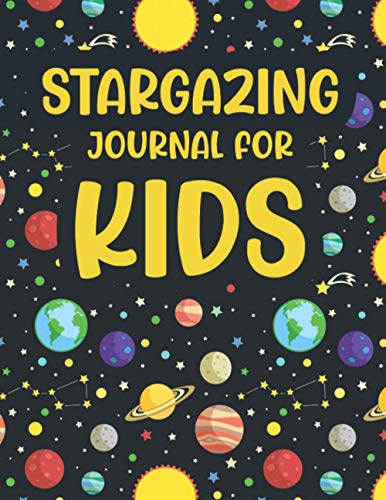
- Publishing, Marikz (Author)
- English (Publication Language)
- 100 Pages – 01/26/2021 (Publication Date) – Independently published (Publisher)
5. Learn the Phases of the Moon
The moon goes through different phases each month, from new moon to full moon and back again. Observing these phases can be a fascinating ongoing project for your kids. You can mark the phases on a calendar and watch how the moon changes each night.
Example: Start a “Moon Phase Calendar” with your kids. Each night, go outside and observe the moon’s shape, then have your kids draw what they see on the calendar. Over a month, they’ll see the progression from a new moon to a full moon and back.
6. Watch for Special Events
Astronomical events like meteor showers, lunar eclipses, or planetary alignments are exciting opportunities to learn about space. These events don’t happen every day, so they can be special moments to share with your kids.
Example: Plan to stay up late for a meteor shower like the Perseids in August. Bring out some blankets, lie back, and count the shooting stars together. Talk about what causes meteor showers and where the meteors come from.
7. Introduce Basic Astronomy Concepts
As you observe the night sky, take the opportunity to introduce basic astronomy concepts in simple terms. Explain things like why stars twinkle, how the Earth rotates and revolves around the sun, or what causes the different seasons.
Example: When looking at the stars, explain to your kids that stars are like our sun but much farther away. You can also tell them why the stars seem to twinkle (due to the Earth’s atmosphere) and how different stars are different colors because of their temperature.
8. Set Up a Planet Viewing
Some planets, like Venus, Jupiter, and Saturn, are visible to the naked eye or with simple binoculars. Plan a night to view these planets, and use an app to help locate them in the sky. Discuss the unique features of each planet, like Saturn’s rings or Jupiter’s moons.
Example: On a clear night, find Jupiter and point it out to your kids. With a pair of binoculars, you might even see its four largest moons. Explain that these moons were discovered by Galileo and are named Io, Europa, Ganymede, and Callisto.
9. Tell Stories About the Stars
Many cultures have stories and myths about the constellations. Sharing these stories with your kids can make the stars more meaningful and memorable.
Example: Share the Greek myth of Orion, the great hunter, and point out the constellation in the sky. Explain how different cultures have their own stories about the stars and invite your kids to create their own star stories.
10. Make Stargazing a Regular Activity
Consistency is key to fostering a lasting interest in astronomy. Make stargazing a regular family activity, whether it’s once a week or once a month. Over time, your kids will become more familiar with the night sky and develop a deeper appreciation for the universe.
Example: Designate Friday nights as “Stargazing Nights.” After dinner, head outside with blankets, binoculars, and your stargazing app, and spend some time exploring the sky together.
Final Thoughts
Stargazing is an enriching activity that can spark your kids’ curiosity about the universe. By making it a regular part of your routine and using simple tools and resources, you can guide your children on a journey through the stars, planets, and beyond—all from the comfort of your backyard. So grab a blanket, step outside, and let the night sky become your family’s classroom.

Kate is mom of two rambunctious boys and a self-proclaimed super nerd. With a background in neuroscience, she is passionate about sharing her love of all things STEM with her kids. She loves to find creative ways to teach kids computer science and geek out about coding and math. She has authored several books on coding for kids which can be found at Hachette UK.


