

3D Printing in Elementary Schools: Making It Fun and Easy
This post may contain affiliate links. As an Amazon Associate, I earn from qualifying purchases.
3D printers are becoming more and more common in elementary schools, but teachers are struggling to figure out exactly how to use them. They might seem intimidating at first, and getting started is definitely the hardest step in bringing 3D printing to your elementary school.
Have no fear! Here at p站视频 we’re about to show you just how EASY it is to get started with 3D printing for kids. You won’t believe how fast you can have your kids printing cool and useful objects with your 3D printer.
What are 3D Printers?
First, 3D printers make solid objects out of light plastic. These objects are created by adding layer after layer of this plastic. Each 3D printer uses a modeling program that is run on a computer, laptop, or tablet.
Before buying a beginner 3D printer for your classroom. It’s best to understand how it all works. You can read our ultimate guide to 3D printing with kids here.
What’s the difference between a 3D Printer and a 3D pen?
3D pens and 3D printers both create 3D dimensional objects using melted plastic filaments.
3D printers print plastic objects using computer aided design software. The user creates the design on a computer and the 3D printer will print it out exactly to their specifications. This allows the user to make complex and itricate deisgns.
3D pens require manual skill from the user operating the pen. You need to hold the pen and extrude the filament properly in order to ‘draw’ your design. 3D pens take practice and require some artistic skills. There are a lot of awesome 3D pens for kids and its another great way to learn about 3D design.
What To Know About 3D Printers
Teachers need to consider some important things when deciding on the right printer for 3D printing in elementary schools. The easier the printer, the more students will be able to use it. Some things to consider when deciding on the right 3D printer are:
Affordability
Most printers for use in the classroom range from $300-$500. Although its a big expense, there are loads of useful objects you can print for your classroom that will make your 3D printer pay off quickly. We’ve compiled a list of the best 3D printers for kids here.
Durability
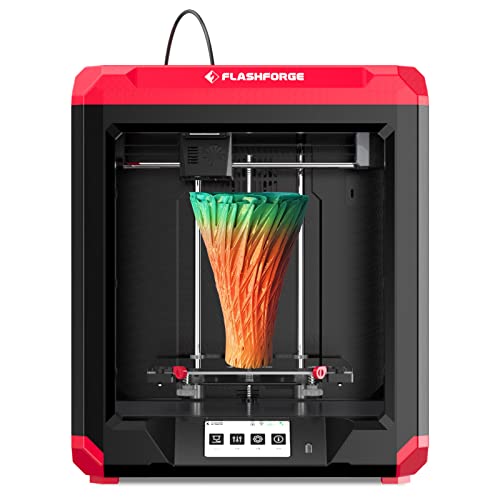
Teachers always set rules and go over expectations. But we know students are not always careful, and accidents happen. The printers that are best for 3D printing for elementary schools are ones that can handle a tumble from a desk. The Flashforge Finder 3D Printer is the printer we use and is a great option.
If the printer will be moving locations, consider getting a 3D printing cart. Many have storage shelves to hold PLA filament, the printer and anything else needed.
Safety
Teachers always need to think about safety when bringing in the 3D printer. Before letting students work with the printer, there are some quick safety rules you want to consider.
Here are some safety guidelines to ensure children are safe while using a 3D printer.
- Students need to wash their hands before and after using the printer. Oils from the skin can affect the print quality.
- The area where the printer is kept should be wiped down before and after use. The print surface should be wiped with isopropyl alcohol (adult supervision needed)
- No eating, drinking, or chewing gum around the machine while it is printing.
- The print head gets extremely hot. If you don’t have a self-contained printer students need to stand back from the printer while its plugged in. Printers should be stored up high away from small hands where possible.
- Always check the printer before use, check for damages, exposed wiring, etc.
- PLA filament is preferred due to it being odourless and without fumes. Opening a window is still always a great idea.
Customer Service
Picking a machine with good customer service and tech support is important. 3D printers are expensive, and sometimes support is needed. We’ve been happy with the support we’ve received from our Flashforge Finder 3.0 3D printer.
Beginner 3D Printing Tutorial
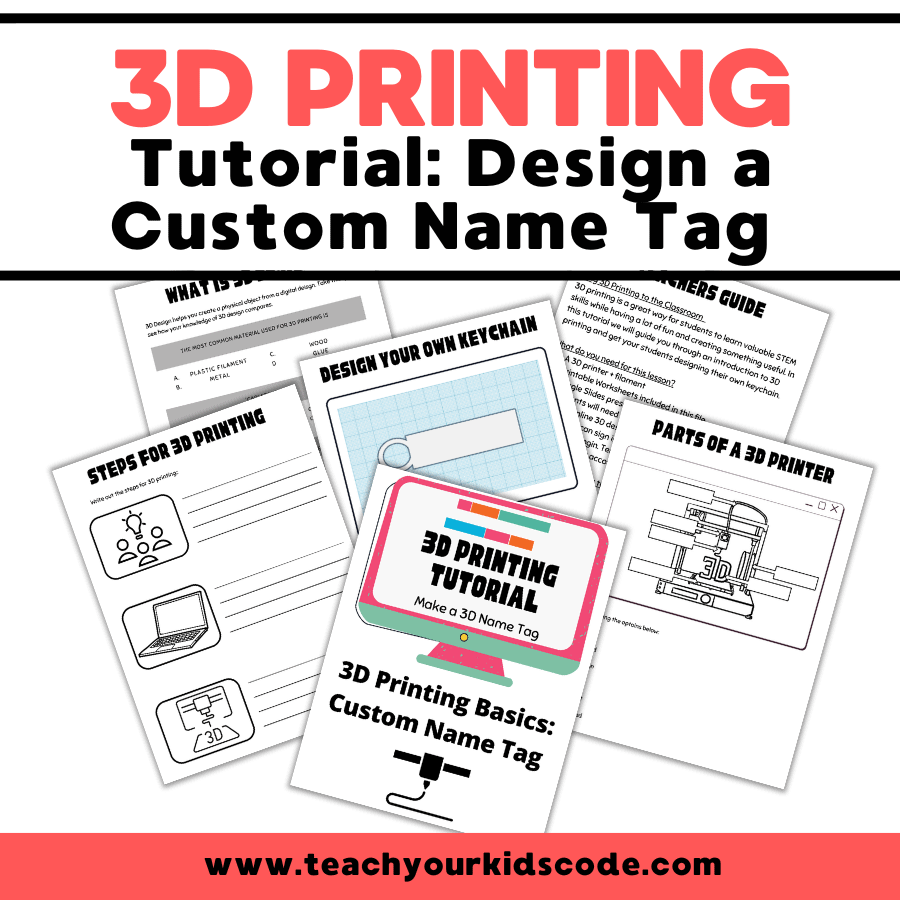
If you are looking for an easy starter tutorial and project for the classroom then check out our 3D printed name tag tutorial. Students will design their own custom nametag keychain using the free 3D desgin software TinkerCad. This is a beginner level project that is a perfect way to break-in your new 3D printer.
7 Ideas for 3D Printing in Elementary Schools
Think of all the lesson plans that can be modified or changed with the access of a 3D printer, and hopefully, one day, every elementary school will have multiple 3D printers available. These printers can be great teaching tools for science, 猪泡泡影院, math, STEAM education, and others. They also can help elementary students with communication, collaboration, and problem-solving skills. Here are some 3D printing 拉拉 for elementary schools.
3D Printing and Coding
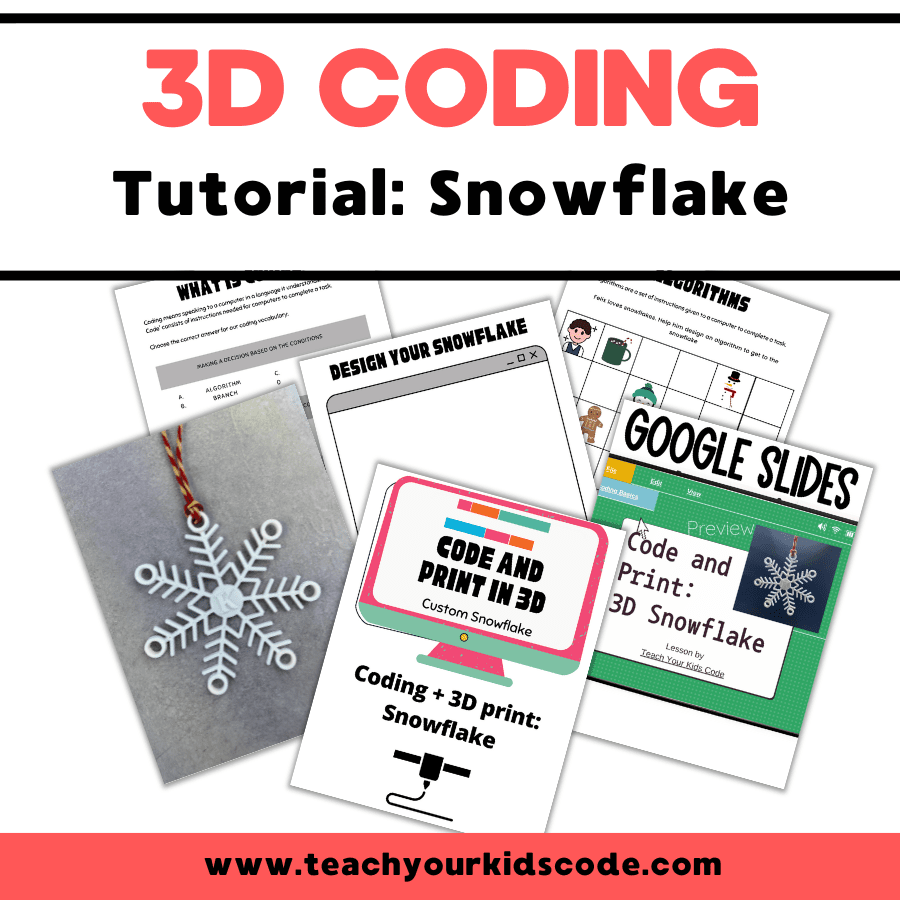
3D printing can help students learn the basics of block-based coding. Coding is emerging part of the curriculum and learning coding skills has many benefits beyond the computer. Here at p站视频 we’ve designed a 3D Code + Print tutorial where students can design their own 3D snowflake.
3D Printing Project Based Learning
Project based learning is a great way to get students thinking about the real world and using the lessons they have learned in ELA, math, science, etc., to help them develop a project to show their understanding. 3D printing in elementary schools will allow students to bring their projects to life and project-based learning up a notch!
3D Printing For History and Social Studies
Many of the social studies curriculums in elementary school revolve around maps. Let your students print physical maps of the countries, states, or regions you study. Students can create even create dinosaur fossils, replicas of different physical landforms, or even a leaning tower of Pisa or other famous landmarks from the area you are studying.
Check out this free world map 3D printing file here.
3D Printing for Math
There are many ways to use 3D printing in math! Area, volume, fractions, and decimals are just a few topics where 3D printing could enhance learning. Teachers and students can use 3D printing to create pieces that can be used for math manipulatives like fraction tiles, place value tools, and basic operations symbols. Imagine the joy of never having to buy unifix cubes or 100 blocks again!
Some specific lessons where 3D printing can be used are if your students are learning about fractions, volume, or area. Have them can create a fraction pizza and figure out exactly how many “pieces” they need to cut to create a “whole” pizza. They will quickly learn how fractions change with a delicious 3D pizza in front of them. If working with volume or area, they can create different rectangles and determine the volume or area of each other’s creations.
Check out this free fractions math manipulative 3D printing file.
3D Printing of Puzzles
3D printing in elementary schools can offer students many opportunities to work with partners to create. One way is to have students work in groups to create a puzzle. Give specifics for each team, such as 25 pieces, all must fit together, and it must create a picture or graphic—a great way to learn about teamwork, color, graphics, and more.
You can even create educational puzzles to keep in your classroom from year to year. There are a ton of 3D-printed puzzles available here.
3D Printing for Creative Thinking
Let your students design something they think would be helpful, cool, or just exciting. Give students open-ended questions like:
- What can you create to help solve a real-world problem?
- What is an invention that can make kids’ lives easier?
Let them work together and go through the steps of the thinking and design process. You never know. Your students could be the next famous modern-day inventors!
Students can use the free software TinkerCad to build their designs.
3D Printing for Music
If you want to incorporate music into the 3D world and get students thinking about different cultures and the music they play. Students can create musical instruments from those cultures and try to learn how to play them. A great cross-curriculum activity for social studies!
Check out this free egg-shaped flute 3D printing file here.
3D Printing in Science
3D printing in elementary schools and science go hand in hand. Students who are studying biology could recreate the brain, human organs, and the skeletal system. Students can bring back the dinosaurs, create a cell diagram, and more!
Check out this free 3D frog dissection kit.
3D Printing in Elementary Schools
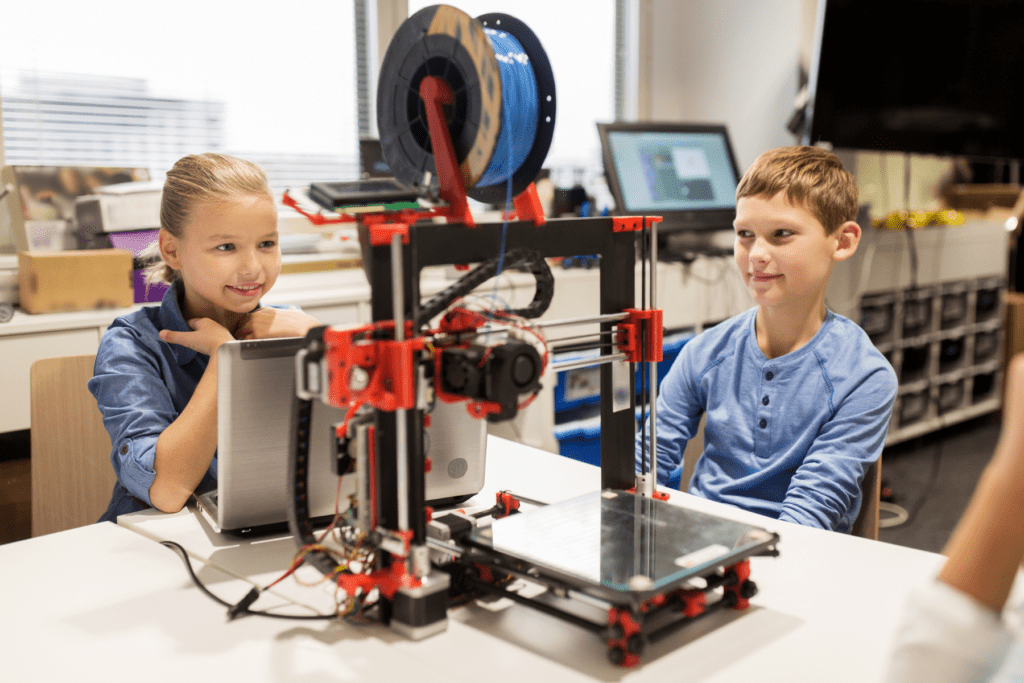
Bringing 3D printers and this amazing printing 猪泡泡影院 into the classroom can change how students learn STEM topics and subjects. There are many projects students can complete and become engaged in. Just find the right ones to get started with!
Kate is mom of two rambunctious boys and a self-proclaimed super nerd. With a background in neuroscience, she is passionate about sharing her love of all things STEM with her kids. She loves to find creative ways to teach kids computer science and geek out about coding and math. She has authored several books on coding for kids which can be found at Hachette UK.


![3D Printed Pencil Holder Tutorial [+ Classroom Guide]](https://63kanshu.com/wp-content/uploads/2023/06/IMG_3039-768x1024.jpeg)
